Top tips from our team
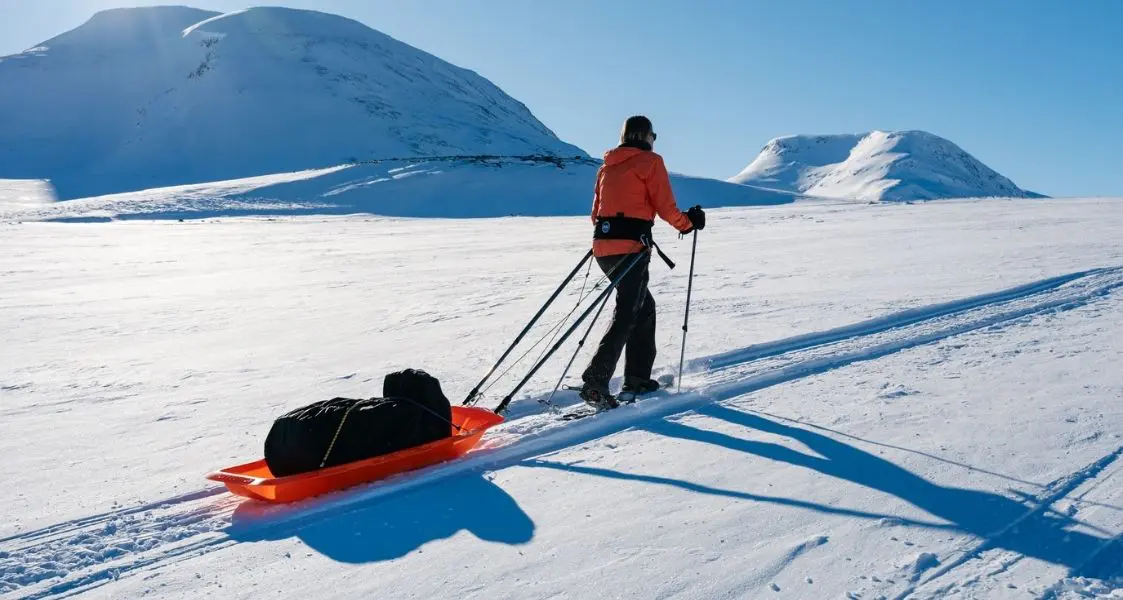
- A pulka is a small sled you pull behind you on a rope or harness, so you don’t carry your gear on your back. Your shoulders will thank you.
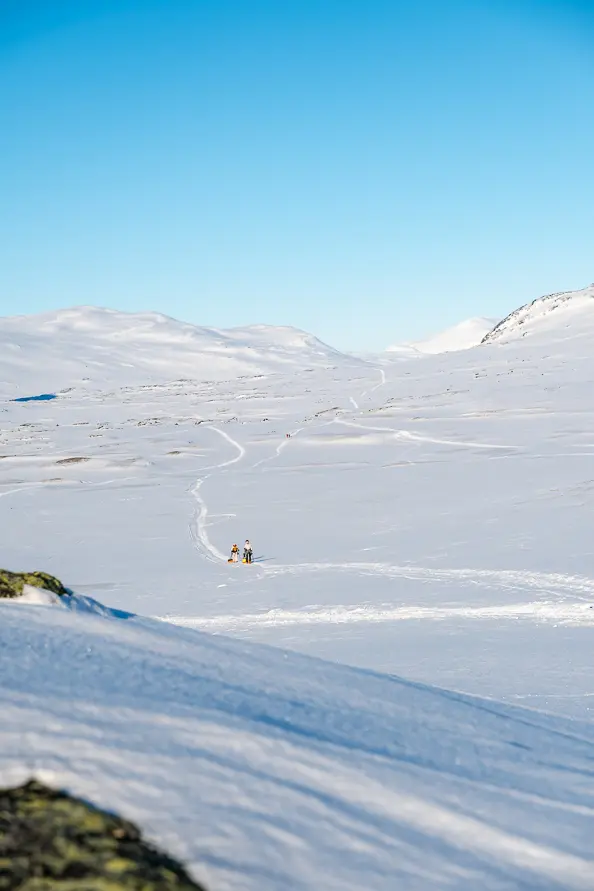
- You’ll use a pulka on the winter Kungsleden, Sweden’s most famous trail, between huts spaced 10 to 20 km apart.
- Pulling a pulka is easier on flat snow and frozen lakes, trickier uphill or through soft, fresh snow. Good boots and a steady rhythm matter more than raw strength.
- Pack smart: heavy items low and close to the front of the pulka, so it tracks straight behind you instead of swinging sideways.
- No pulka experience needed to book our 7-day King’s Trail expedition. Guides show you everything on day one.
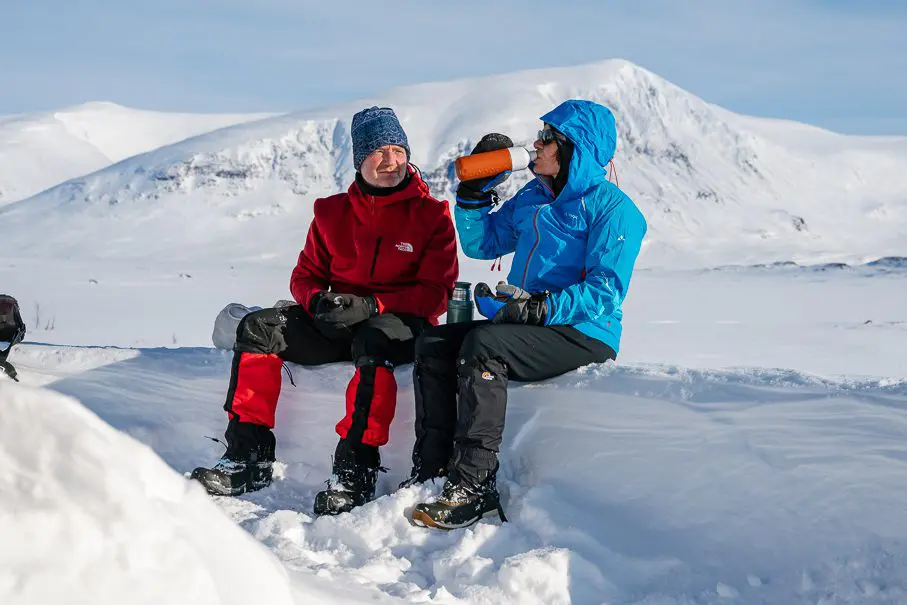
- Layered clothing beats one thick jacket, since pulka hiking warms you up fast even at -15°C.
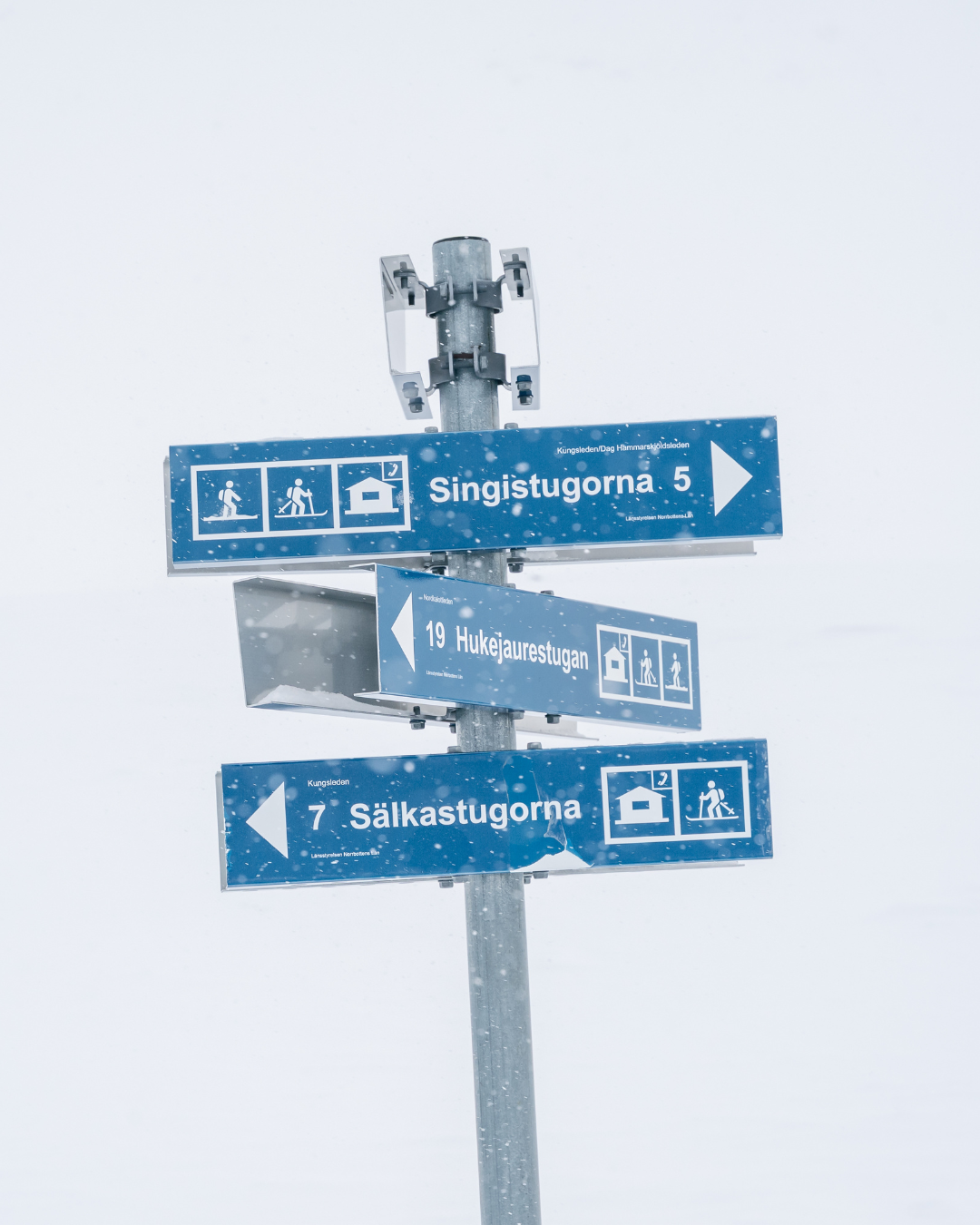
Hiking With a Pulka: Everything You Need to Know
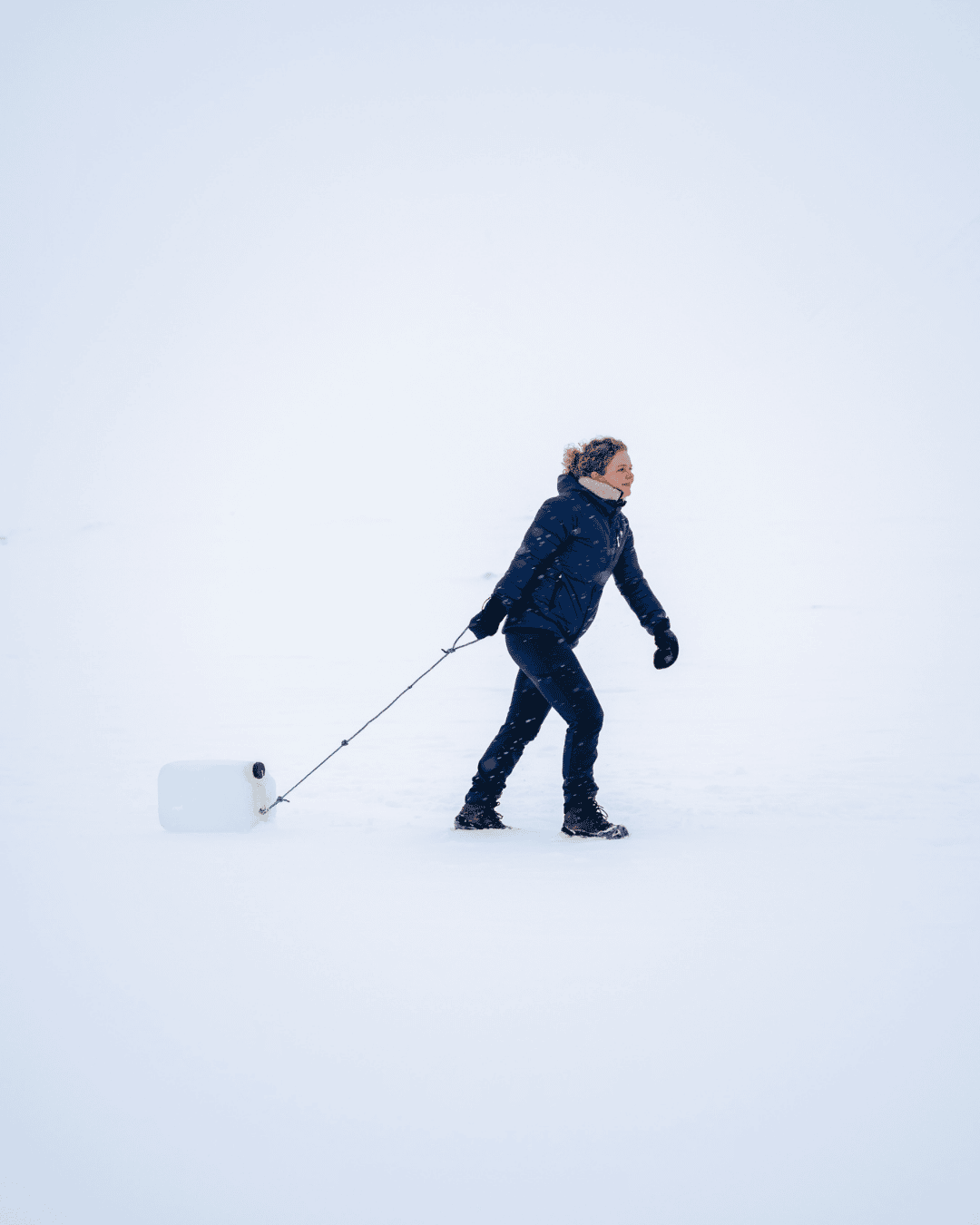
Picture this. You’re standing on a frozen lake, 200 kilometres north of the Arctic Circle, and the only sound is your skis crunching through fresh snow. Behind you, tied to your waist by a simple rope, glides a small sled loaded with your sleeping bag, your food, your whole little world for the week. That sled is a pulka, and it’s about to become your best friend in Swedish Lapland.
Swedish Lapland is not really like anywhere else. It’s a region of birch forests, wide open tundra, and mountains that turn pink at 2pm in December because the sun barely lifts above the horizon. Reindeer wander across the trail like they own the place, because, honestly, they kind of do. In winter, this landscape gets buried under snow so deep and so quiet that even locals describe it as otherworldly. And running straight through the heart of it is the Kungsleden, the King’s Trail, a route that has pulled hikers and skiers north for over a century.
What Exactly Is a Pulka?
A pulka is a low, boat-shaped sled, usually made of tough plastic, that you pull behind you while walking, skiing, or snowshoeing. It’s attached with a rope or a pair of flexible poles to a simple harness around your hips. Think of it as a very obedient dog that carries your luggage and never complains, well, almost never.
The word itself comes from the Sámi, the Indigenous people of northern Scandinavia, who have used pulka-like sleds for centuries to move gear, food, and even children across the snow. Long before tourists discovered pulka hiking as an adventure activity, it was simply how you got around up here in winter. That’s a fun fact worth knowing: every time you clip into a pulka on the Kungsleden, you’re using a tool with roots going back hundreds of years.
Why Use a Pulka Instead of a Backpack?
Here’s the practical reason a pulka beats a heavy backpack on winter trails: snow. Deep, endless snow. A loaded backpack pulls you backward and down, straining your shoulders and lower back with every step. A pulka spreads that same weight across a sled that glides on the snow instead of sitting on your spine. You barely notice 20 kilograms of gear behind you once you find your rhythm.
There’s also a comfort factor that people don’t expect. With a pulka, you can pack a proper sleeping bag, extra thermal layers, and enough food for multiple days without turning your back into a suitcase. On the King’s Trail, where you move from hut to hut across 10 to 20 kilometre stretches each day, that difference adds up fast.
What Pulka Hiking Actually Feels Like
The first hour with a pulka feels a little strange, like learning to walk with a shadow that occasionally overtakes you on a downhill. Then something clicks. You settle into a steady gliding pace on skis or snowshoes, the pulka trailing obediently behind, and the whole day becomes almost meditative. Flat terrain and frozen lakes are pulka paradise. The sled practically pulls itself. Uphill sections and soft, fresh snow ask more of your legs, and that’s when a slower, patient pace pays off.
Most people describe the sound of pulka hiking before anything else: the soft hiss of the sled on snow, skis cutting through powder, and otherwise almost total silence. On the Kungsleden between Abisko and Nikkaluokta, that silence gets interrupted only by wind over open tundra, the odd reindeer snort, or your own laughter when the pulka decides to slide sideways on a slope.
Packing a Pulka the Right Way
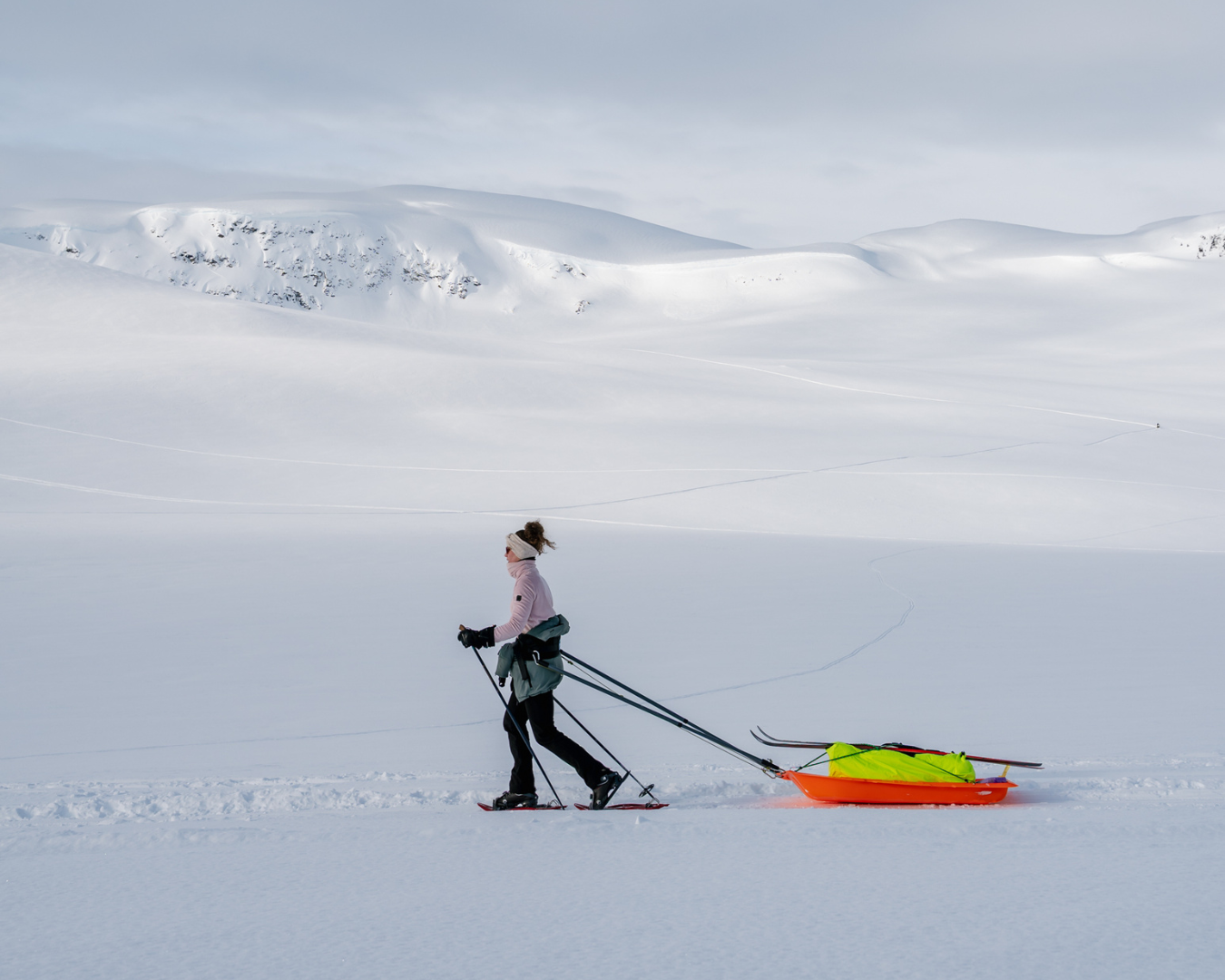
Loading a pulka correctly makes or breaks your day. Heavy items (food, stove, fuel) belong low and toward the front, close to where the sled connects to you. This keeps the pulka tracking straight behind you rather than fishtailing on every turn. Lighter items like extra clothing or your sleeping mat go on top and toward the back.
A well-packed pulka also stays dry and organised, which matters when you’re digging for gloves at -18°C and don’t want to unpack your entire sled to find them. Dry bags inside the pulka are a small trick that saves a lot of frustration. On our King’s Trail trip, guides help everyone pack their pulka properly on the very first morning, so nobody’s fumbling with straps in the cold and wondering what they signed up for.
The Kungsleden: Sweden’s Ultimate Pulka Playground
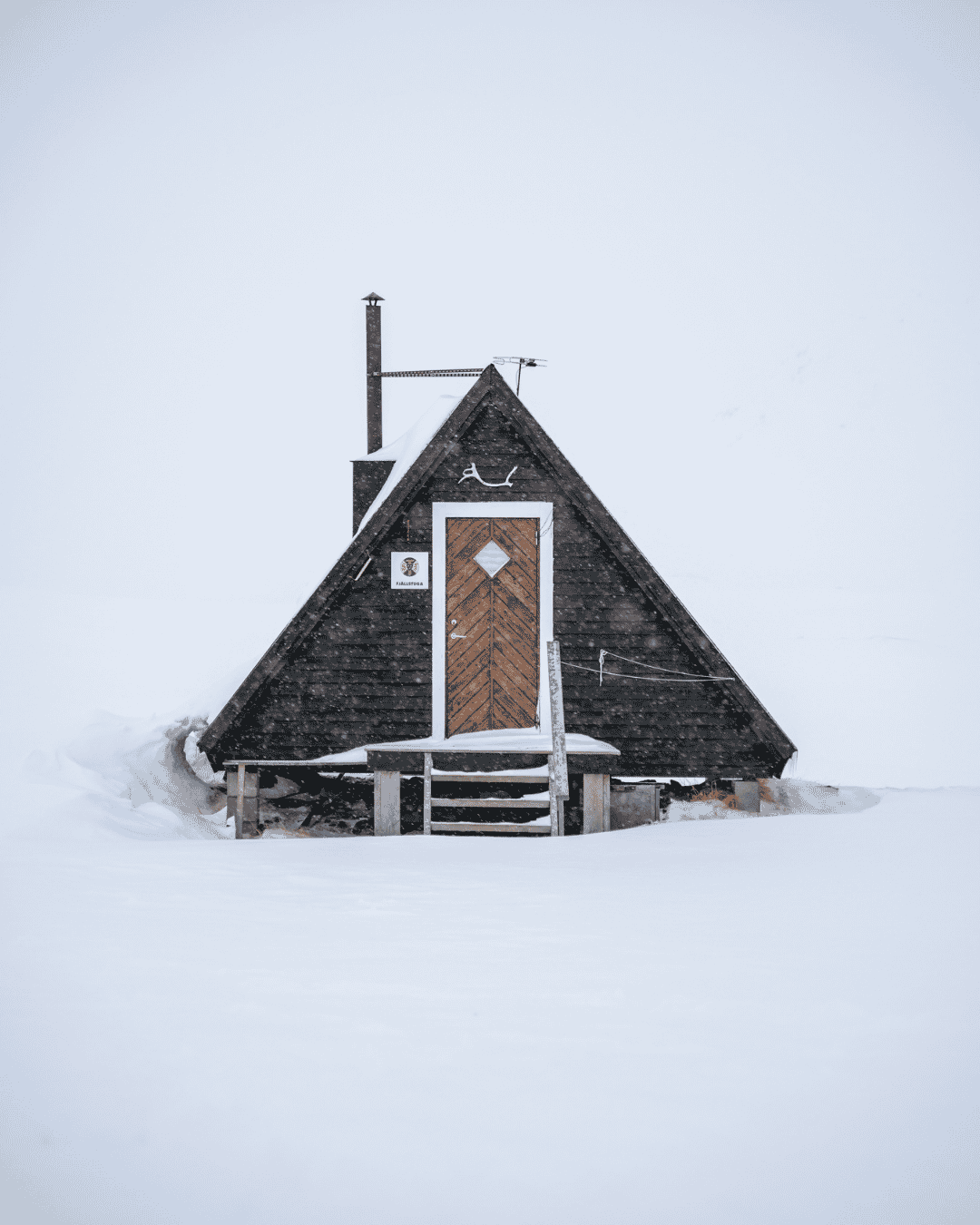
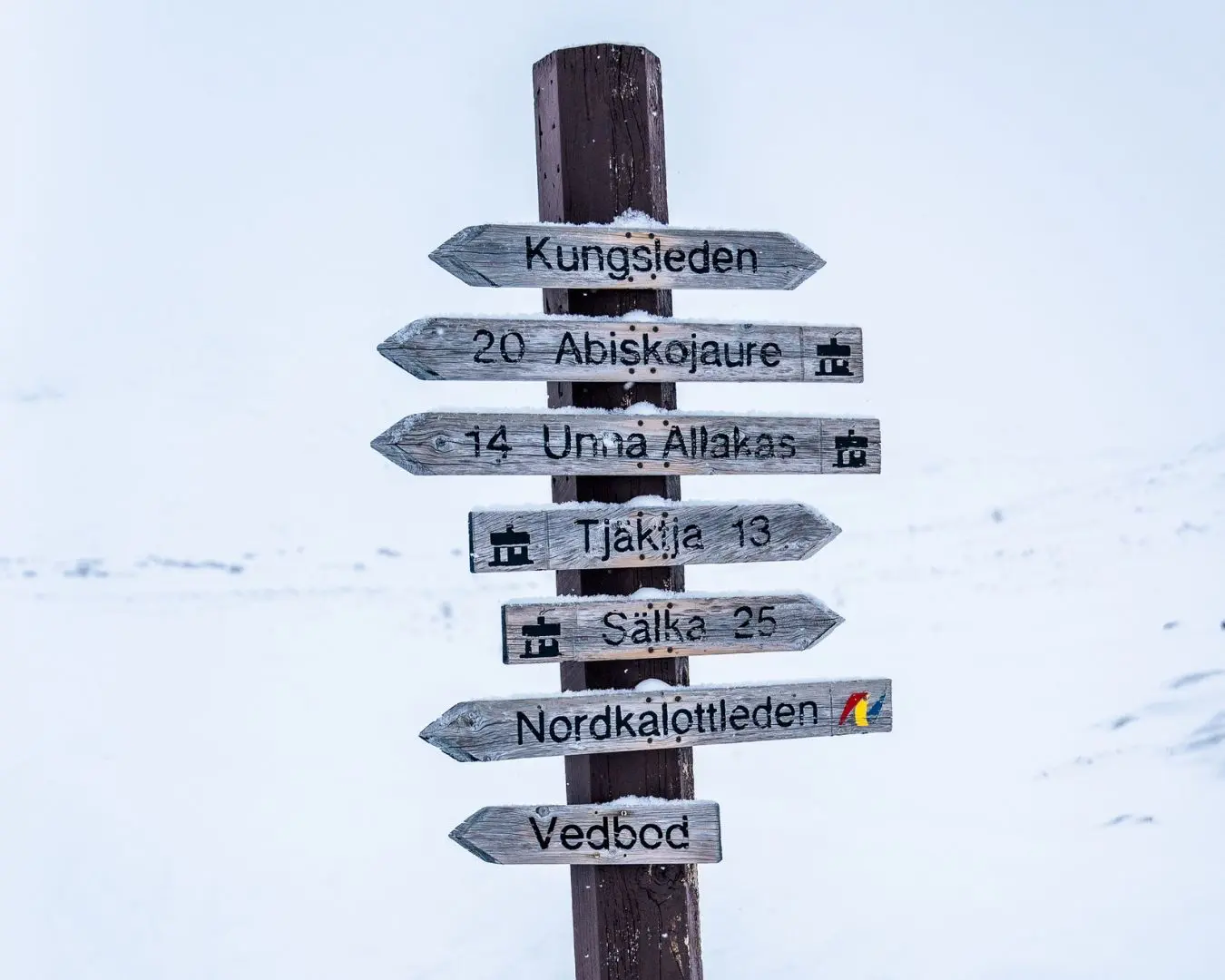
If there’s one trail practically made for pulka hiking, it’s the Kungsleden. Stretching about 425 kilometres from Abisko in the north to Hemavan in the south, the King’s Trail is Scandinavia’s most iconic hiking route, and in winter it transforms completely. The summer crowds disappear, the trail becomes accessible only on skis, snowshoes, or with a pulka, and the landscape turns into an endless white expanse dotted with red-painted wilderness huts.
Between Abisko and Nikkaluokta, hikers cross the Tjäktja pass, wander past birch forests where elk and reindeer roam, and pass close to Kebnekaise, Sweden’s highest peak at 2,096 metres. Along the way sits Singi, a tiny Sámi settlement that feels frozen in time, appropriately, given the season. Pulling a pulka through this section of the Kungsleden is less a workout and more a full sensory experience: crunching snow, sweeping views, and the very real possibility of the Northern Lights dancing overhead once the huts’ lanterns are lit for the night.
Do You Need Experience to Hike With a Pulka?
Not really, and that surprises most people. Pulka hiking rewards technique and pacing far more than raw fitness or prior ski experience. Basic snowshoe or ski skills help, sure, but the pulka itself is fairly forgiving once you understand the harness and the rhythm of pulling it. Guided trips exist precisely for this reason: an experienced guide can turn a first-timer into a confident pulka hiker within a single morning on the snow.
That’s exactly the setup on our 7-day Kungsleden expedition, where guides walk you through pulka handling, harness adjustment, and packing before the group sets off from Abisko. By day two, most people forget they were ever nervous about it.
Staying Warm and Comfortable With a Pulka
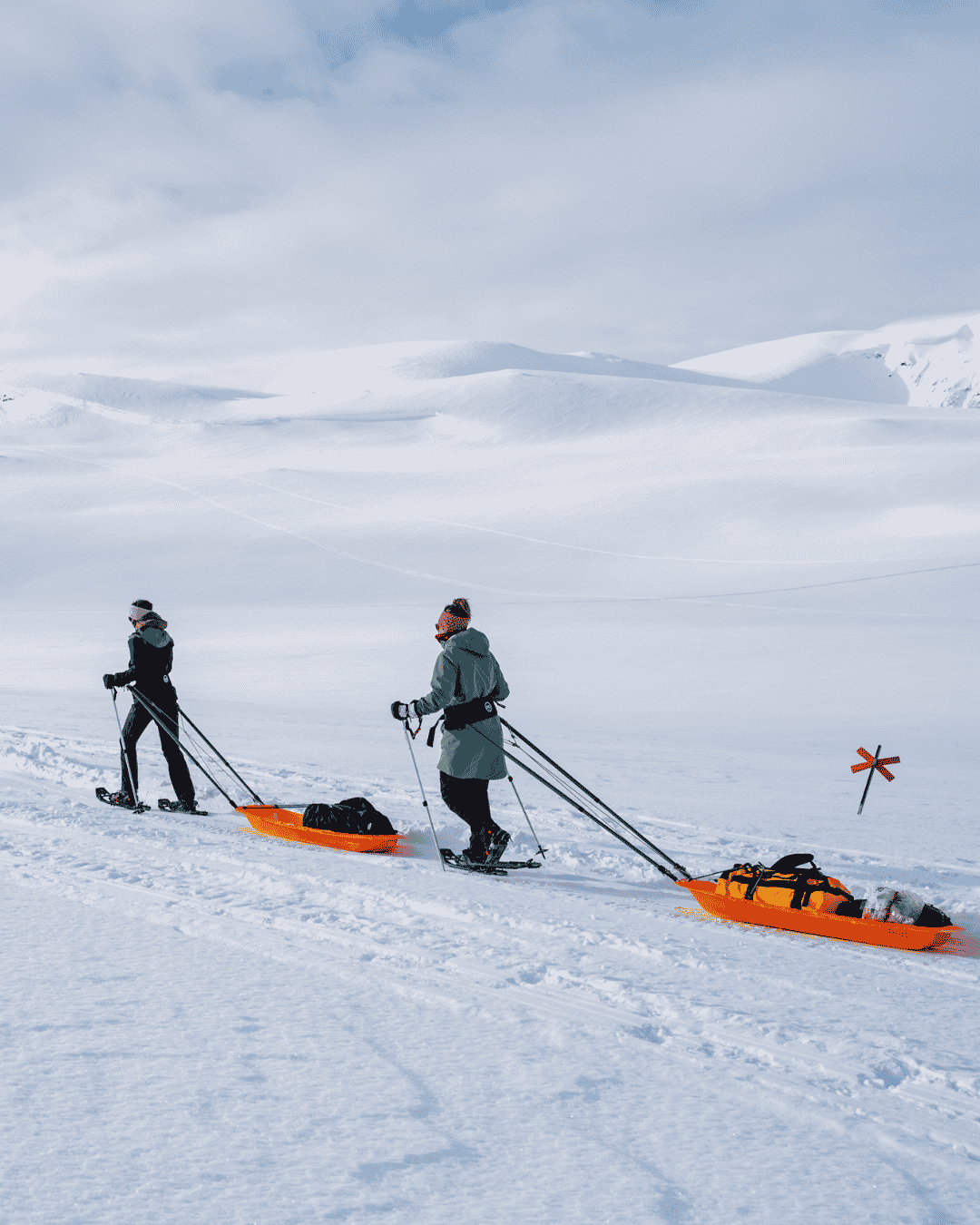
Pulling a pulka is genuinely active, which means you heat up faster than you’d expect even in serious cold. The trick is layering: a breathable base layer, an insulating mid layer, and a windproof outer shell you can vent or remove as your body temperature climbs. Sweating too much in the Arctic is its own problem, since damp clothing loses insulation fast once you stop moving.
Good boots matter just as much as good layers. Your feet do the steady work while the pulka does the carrying, so proper winter hiking or ski boots with enough insulation make the difference between a great day and a cold, miserable one. Gloves, a warm hat, and a buff for your face round out the essentials. The wind on open stretches of the Kungsleden can bite harder than the thermometer suggests.
A Few Fun Facts About Pulka Hiking
The Sámi originally used reindeer to pull larger pulka-style sleds, long before hikers adapted the idea for their own two feet. Modern touring pulkas are so aerodynamic that some polar expedition teams use nearly identical designs to cross Antarctica and the Arctic Ocean. And here’s one more: the shape of a pulka (low, wide, and boat-like) was designed centuries ago to prevent tipping on uneven ice, and that exact shape barely changed in hundreds of years, because honestly, why fix what isn’t broken.
Hiking with a pulka on the Kungsleden isn’t just a way to carry your gear. It’s a small piece of Arctic tradition clipped to your hips, gliding behind you through some of the most beautiful winter scenery in Europe.