Top tips from our team
- Ski touring covers ground faster on long, flat stretches, but asks a bit more balance from you.
- Snowshoeing is the more forgiving option: you strap in, and you walk. No real learning curve.
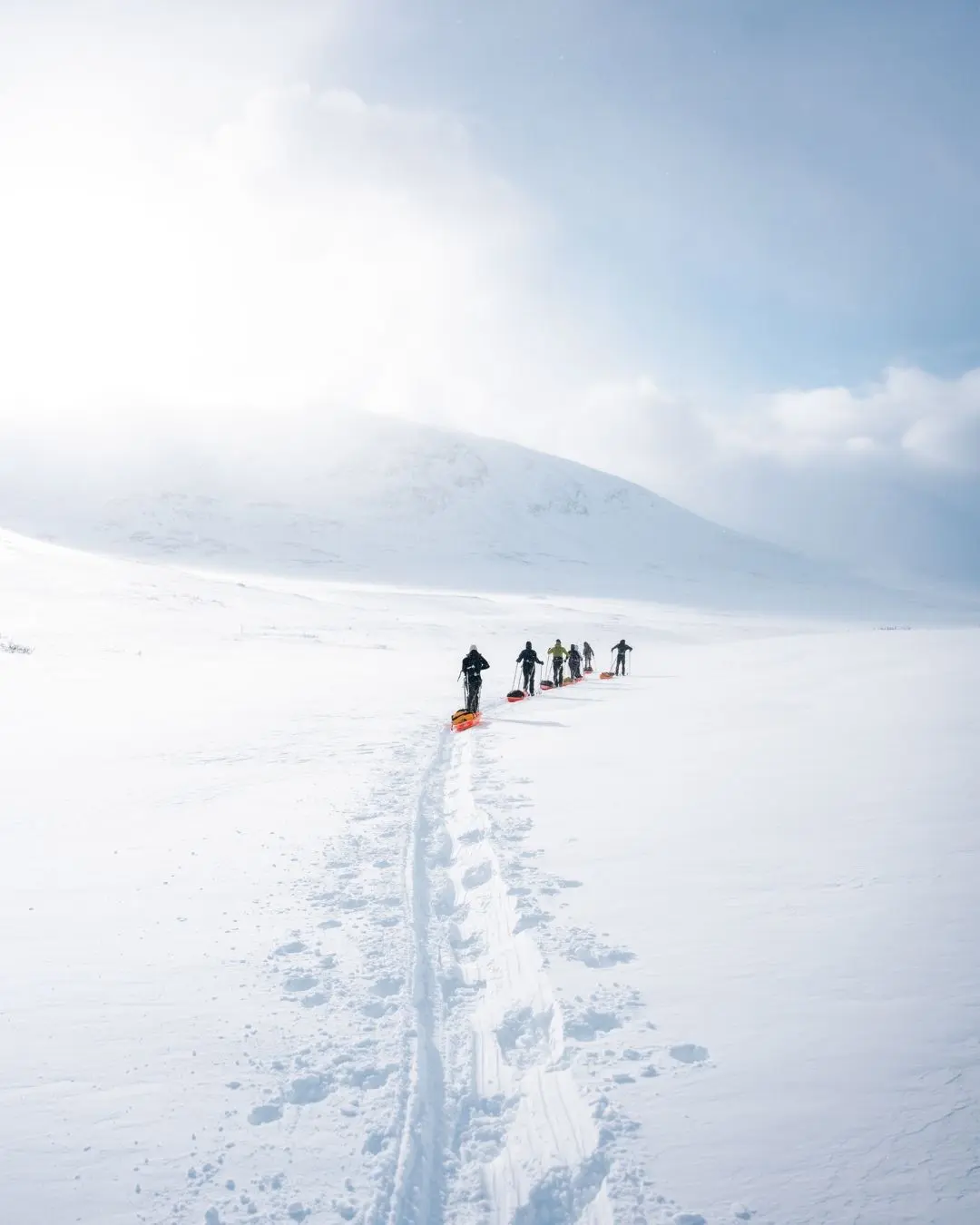
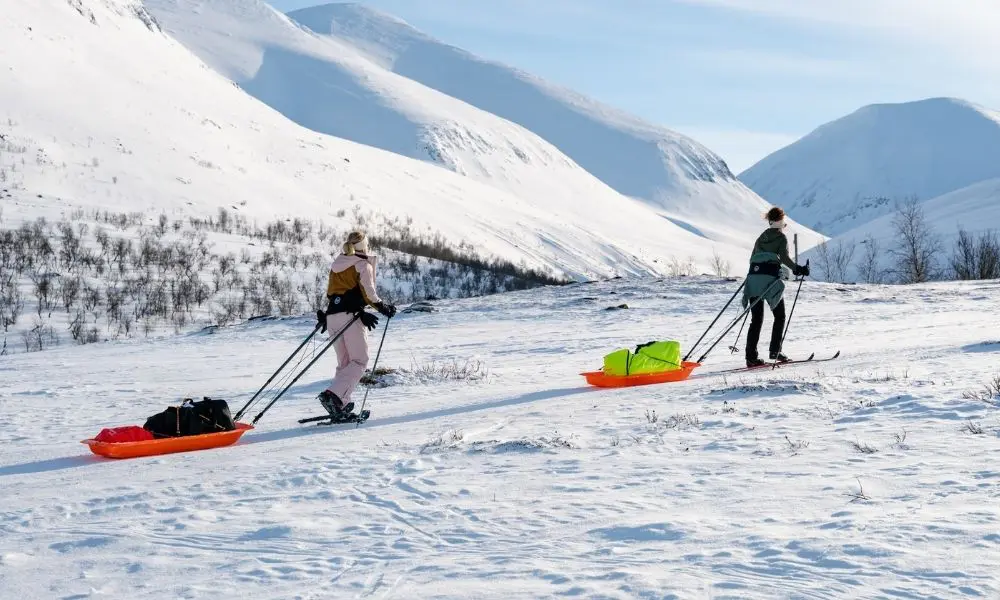
- On the Kungsleden you’ll almost always pull a pulka (a small expedition sled) behind you, whichever option you pick, so your back stays free of the heavy lifting.
- Deep, soft snow favours snowshoeing. Packed, open terrain favours ski touring.
- Neither option requires prior experience. Most people pick up the basics within a few hours on day one.
- Both options lead to the same huts, the same saunas, and the same chance of seeing the Northern Lights at the end of the day.
Ski Touring vs Snowshoeing: Which Is Best for Your Arctic Adventure?
Picture this for a second. You step out of a warm hut into air so cold it makes your nose hairs freeze instantly. The sky above you is doing something ridiculous, a green curtain rippling from horizon to horizon. Under your feet, snow that hasn’t been touched in weeks squeaks with every step. This is Swedish Lapland in winter, roughly 200 kilometers above the Arctic Circle, and it’s one of the last truly wild corners of Europe. Birch forests give way to open, treeless plateaus. Reindeer wander past without a hint of concern. And somewhere in the middle of all that white, you get to choose how you move through it: ski touring, or snowshoeing.
That choice matters more than people expect. It shapes your pace, your effort, and honestly, your whole experience of the days ahead. So let’s break it down properly, the way you’d want a friend who’s done it to explain it to you over a beer.
A Quick Word About Swedish Lapland Itself
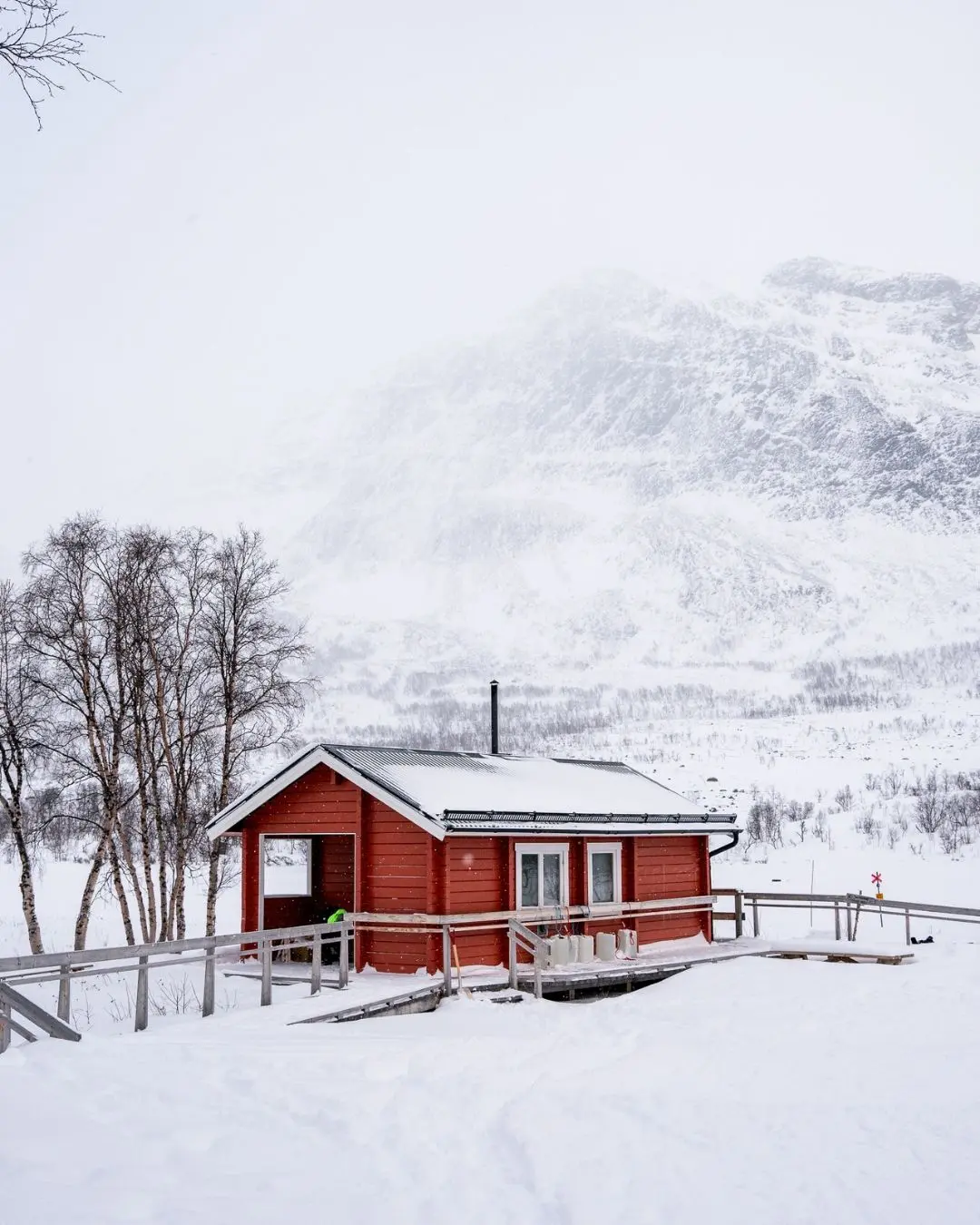
Before we get into gear talk, it helps to know where we’re actually talking about. Swedish Lapland is enormous, cold, and almost eerily quiet in winter. The region sits north of the Arctic Circle, which means during the darkest months the sun barely climbs above the horizon, and sometimes doesn’t at all. That sounds bleak on paper. In reality, it means soft blue light for most of the day and pitch-black, star-drenched nights perfect for spotting the aurora. The most famous route through this landscape is the Kungsleden, or the King’s Trail, a historic path first mapped out by the Swedish Tourist Association more than a century ago. In summer it’s a hiking trail. In winter, it transforms into something else entirely: a snow-covered corridor between mountain huts, and the exact terrain where the ski touring versus snowshoeing question becomes very real.
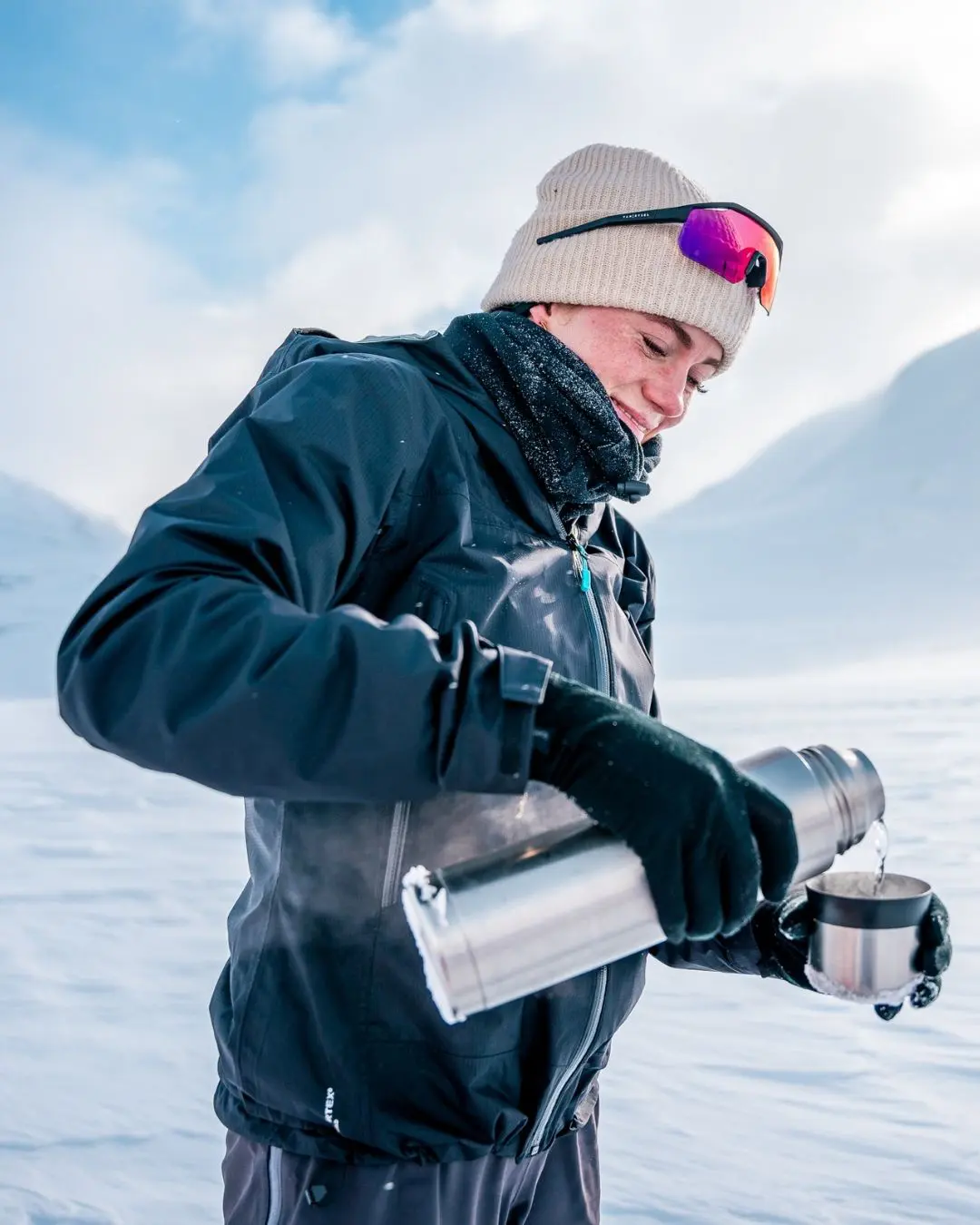
Ski Touring: Gliding Through the Arctic Wilderness
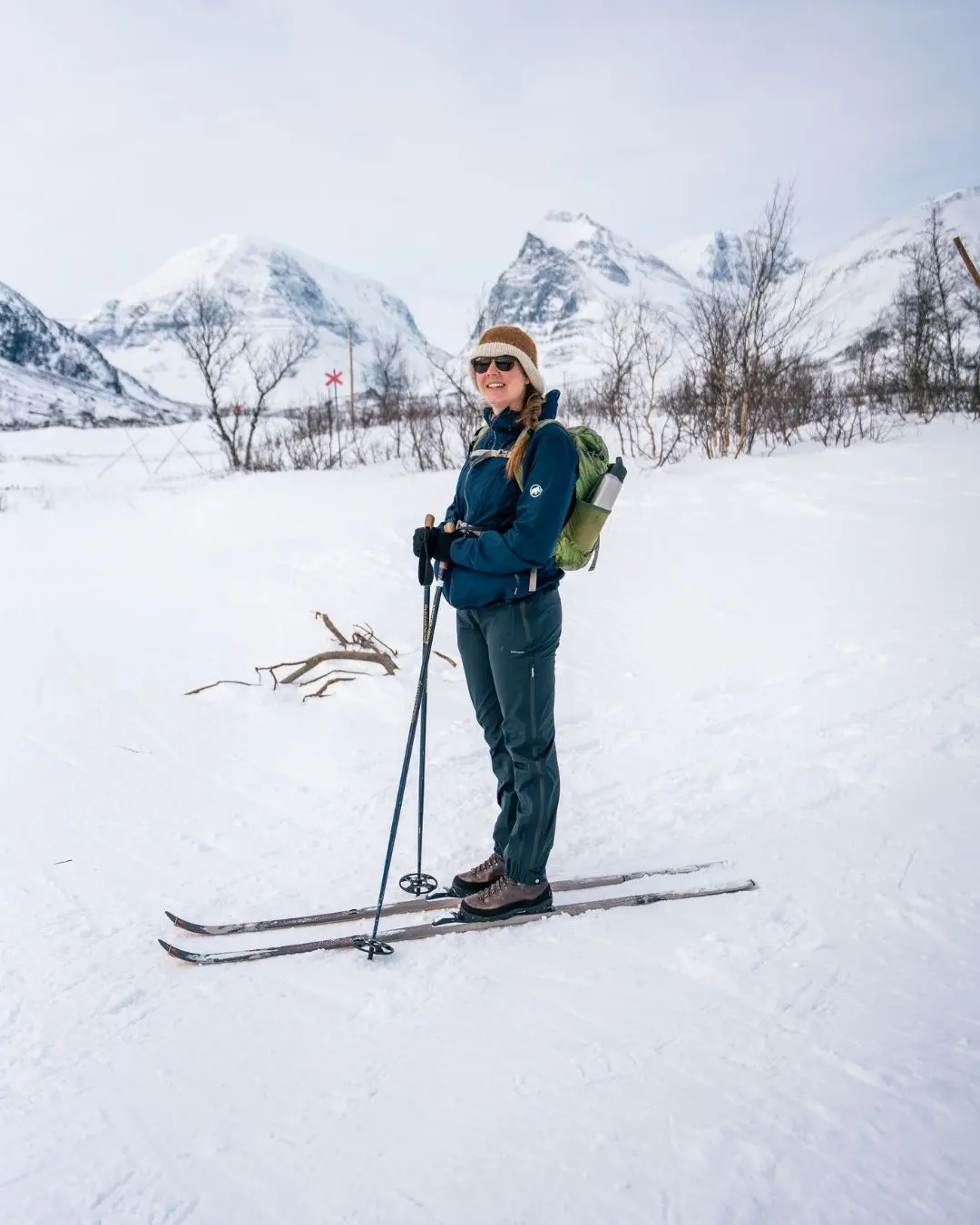
There’s a rhythm to ski touring that people fall in love with almost immediately. You glide. Each stride covers more ground than a footstep ever could, and once you find the motion, it becomes almost meditative. Slide, push, slide, push, with the pulka trailing behind you like a loyal dog carrying your gear so your shoulders don’t have to.
When you’re ski touring, you’re on narrower, lighter skis than the alpine ones you might picture from a resort. There’s no lift involved, obviously, and no fixed heel either. Your boot clips in at the toe, which lets your heel lift freely with each stride. It’s this freedom that makes long-distance travel over flat and rolling terrain so efficient. On a good day, with decent snow conditions, ski touring simply takes less energy than covering the same stretch on snowshoes.
The catch is balance. You’ll wobble a bit on your first morning. That’s completely normal, and it fades fast. By day two, most people are gliding along like they’ve done it their whole life.
Snowshoeing: A Steadier Way to Explore the Snow
Now, if gliding sounds like more coordination than you’re after, snowshoeing might be your answer. There’s a reason it’s often called the most intuitive way to move through deep snow: you strap the snowshoes onto your regular winter boots, and you walk. That’s essentially the whole learning curve.
Snowshoeing spreads your body weight across a wider surface area, which stops you from sinking into soft, fresh snow the way you would in ordinary boots. Think of it like giving your feet their own miniature landing pads. Every step stays firm and grounded, rather than sliding, which some people find more reassuring, especially the first time they’re navigating a slope or uneven ground near a frozen stream.
It’s slower than ski touring, there’s no getting around that. But slower isn’t necessarily worse out here. Snowshoeing gives you more time to actually look up, to notice the reindeer tracks crossing your path, or the way the light hits a distant peak. Some of the best trail moments happen at snowshoeing pace, simply because there’s more room to take it all in.
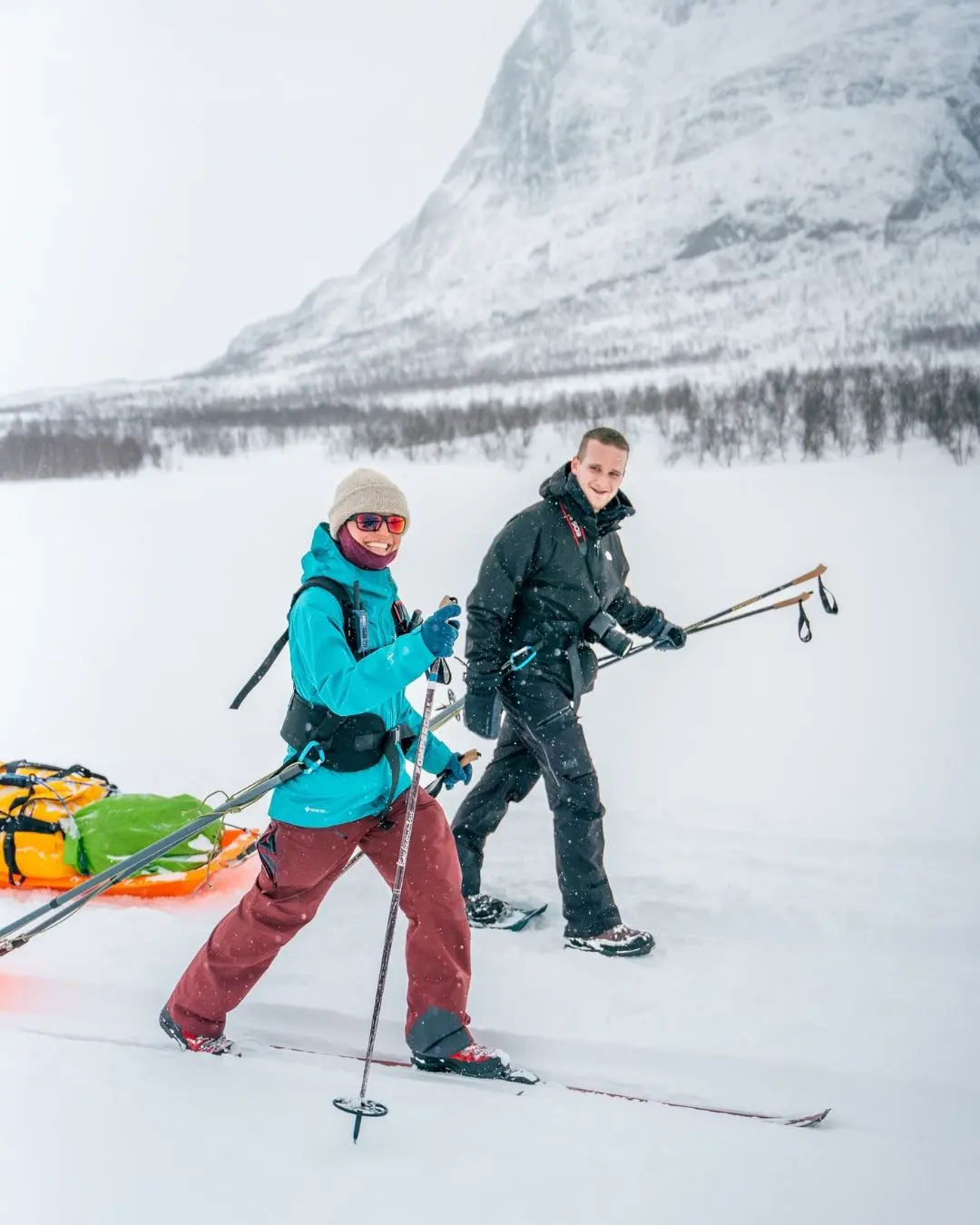
Ski Touring vs Snowshoeing: Key Differences You’ll Feel in Your Legs
Let’s get concrete. The biggest difference between ski touring and snowshoeing comes down to terrain and snow condition. On packed or wind-crusted snow, especially across the wide open plateaus you’ll cross on the Kungsleden, ski touring genuinely flies. You’ll cover the same distance with noticeably less fatigue than someone walking it.
Flip that around, and put fresh, deep, unpacked snow underfoot, and snowshoeing suddenly has the advantage. Skis can struggle for grip on steep, technical sections or in narrow spots between trees, where the wider stance of snowshoes actually feels more stable.
Muscle-wise, expect different soreness the next morning. Ski touring works your hips, core, and that gliding push-off through your legs. Snowshoeing is closer to hiking with slightly heavier boots, so your calves and thighs take more of the load. Neither is objectively harder. They’re just different conversations with your body.
Which Suits Your Fitness Level: Ski Touring or Snowshoeing?
Here’s the honest answer: both are approachable for reasonably fit beginners, and neither requires you to have done anything like this before. If you’ve ever gone cross-country skiing at a resort or a local park, ski touring on the Kungsleden will feel familiar, just wilder and with a sled attached. If coordination isn’t your strong suit, or you’d rather focus your energy on the scenery than on staying upright, snowshoeing removes almost all of that concern.
The basics come together fast, often within the first morning near Abisko, so nobody is figuring this out alone in the snow. Most travelers choose based on personal preference rather than fitness level anyway. It really is less about who’s stronger, and more about whether you’d rather glide or stride.
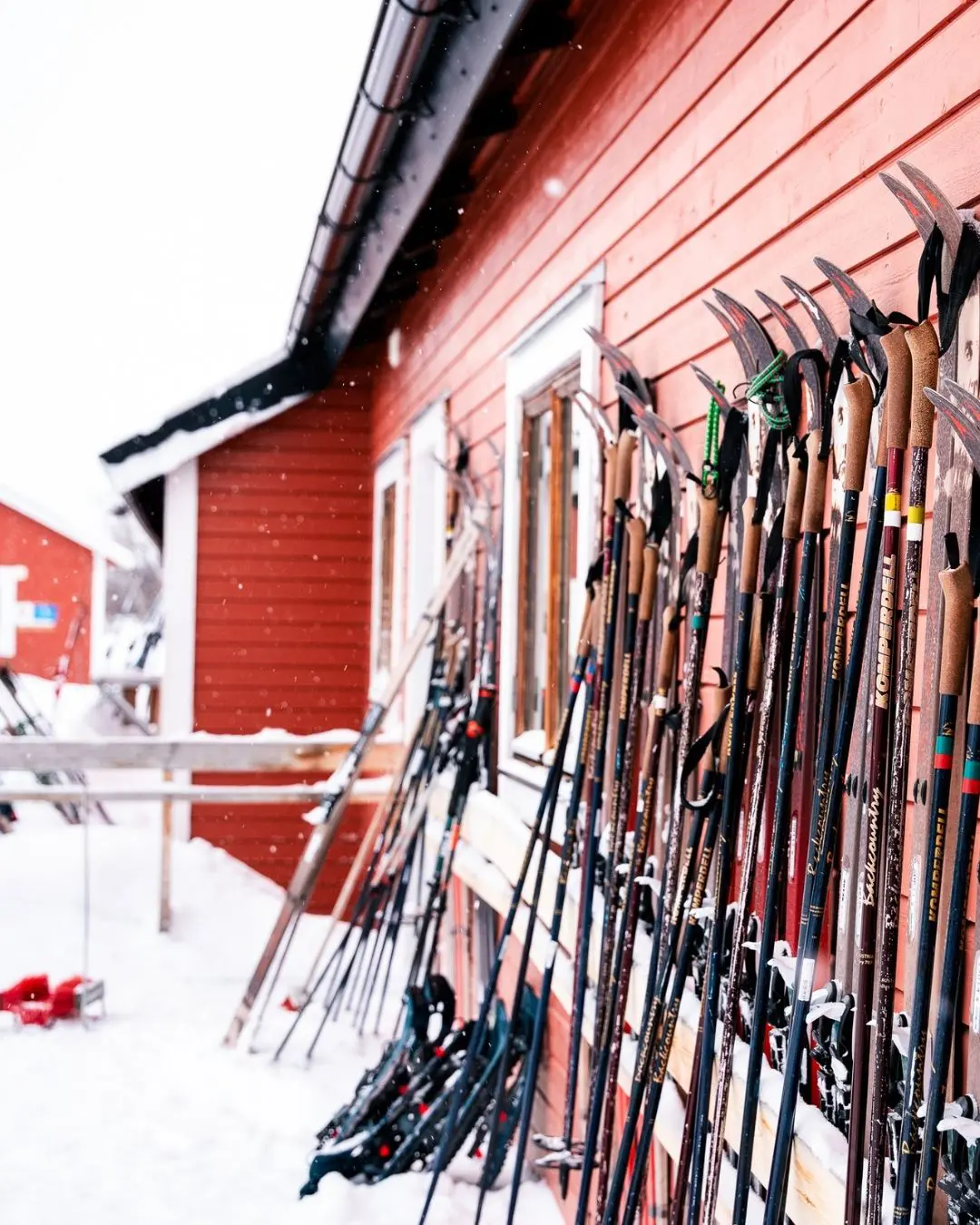
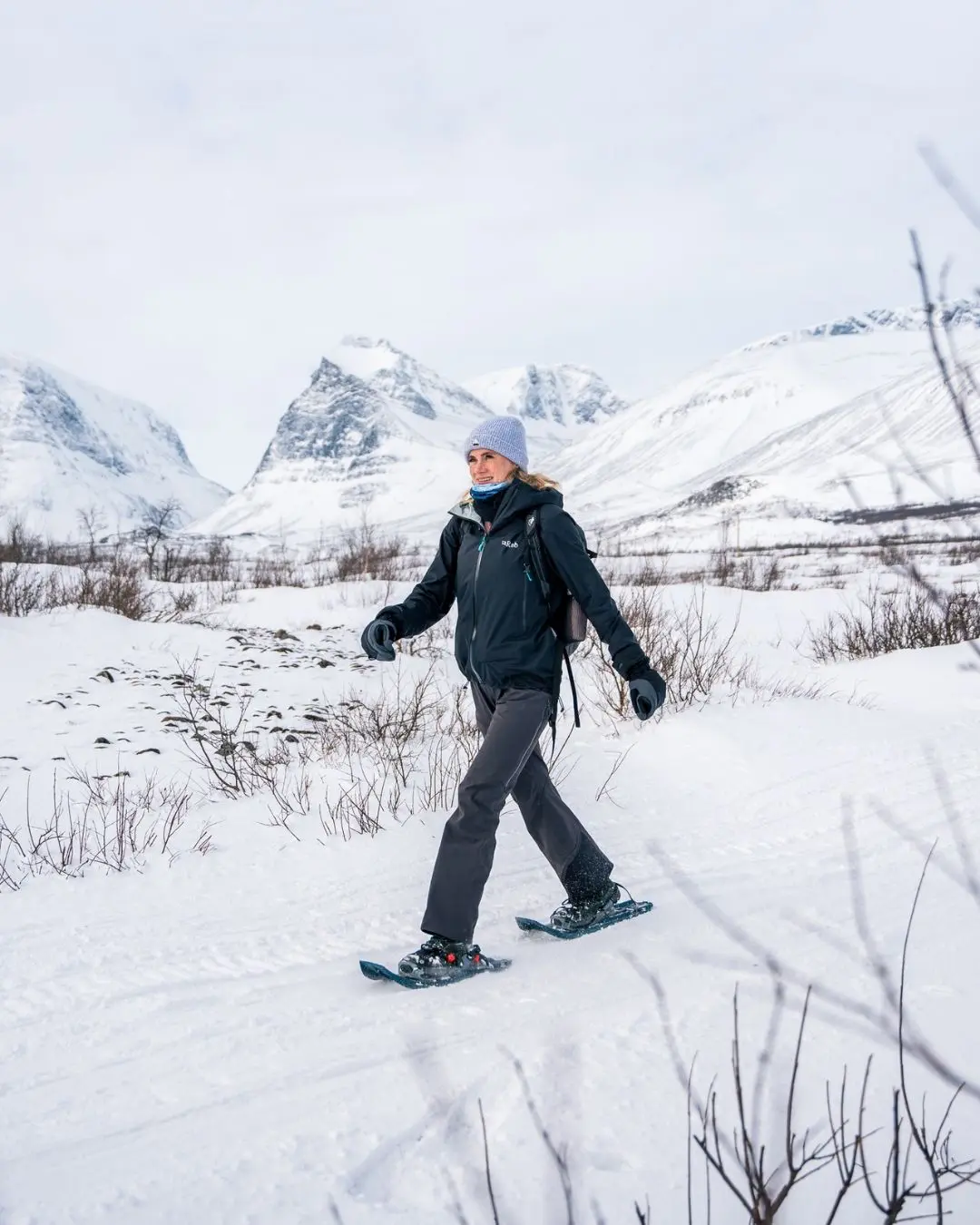
The Terrain of the Kungsleden: Where Ski Touring and Snowshoeing Shine
The Kungsleden itself is the perfect stage for this decision, because it isn’t one type of landscape, it’s several stitched together. You’ll move between wide birch valleys, frozen lake crossings, and exposed alpine sections above the tree line. On the flatter valley floors and across frozen lakes, ski touring lets you eat up distance while barely breaking a sweat. Higher up, where wind sculpts the snow into unpredictable drifts, that same terrain is exactly where snowshoeing offers the steadier grip many travelers end up preferring.
The full Kungsleden stretches over 400 kilometers between Abisko and Hemavan, but the most spectacular northern section covers roughly 75 kilometers between Abisko and Nikkaluokta, tucked beneath Sweden’s highest peaks. It’s demanding enough to feel like a real expedition, without requiring you to be a professional athlete. If you want a closer look at exactly how those days unfold, this 7-day King’s Trail winter trek walks through the whole route hut by hut.
Northern Lights, Saunas and Silence: What Both Options Have in Common
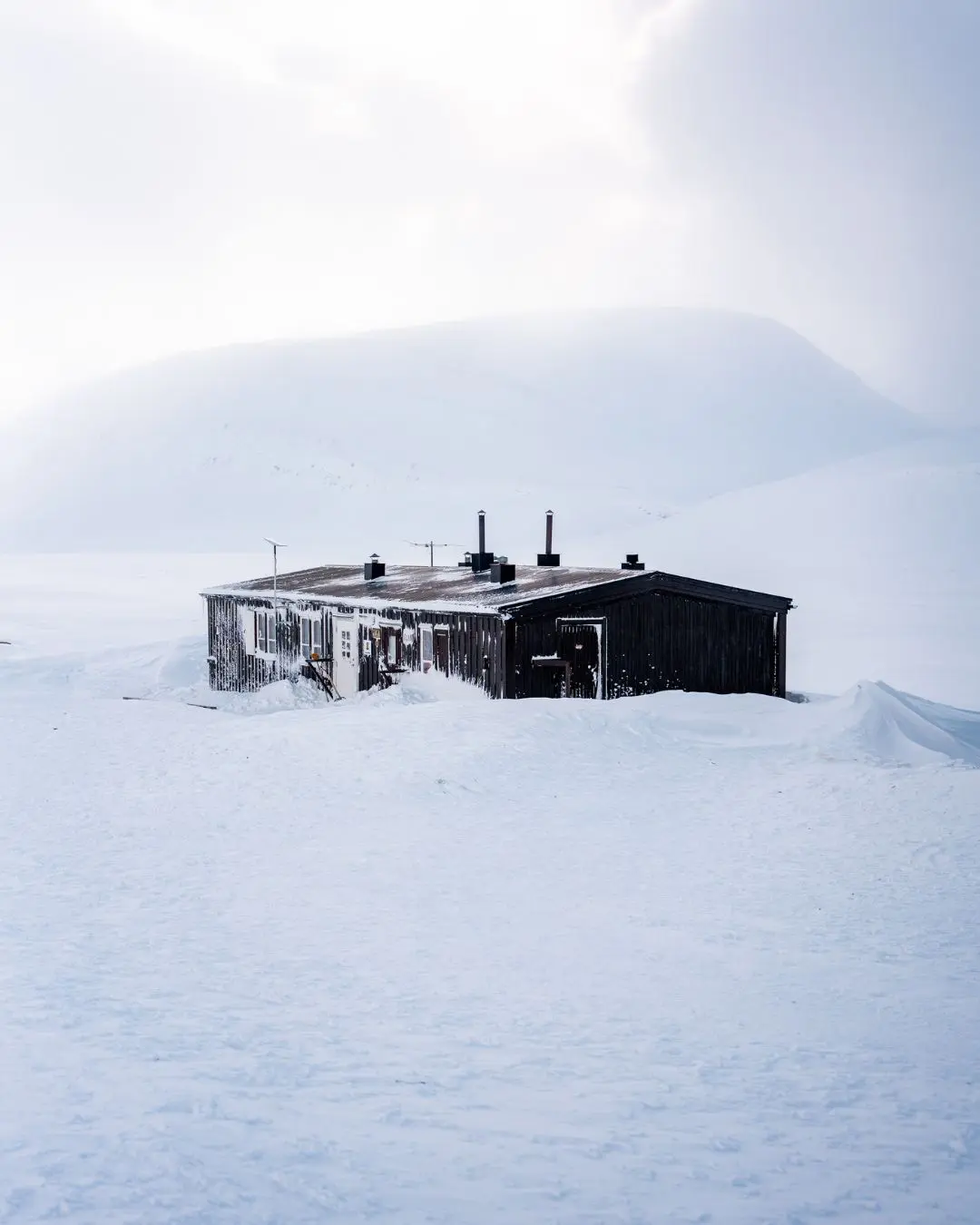
Whichever you choose, ski touring or snowshoeing, your evenings look the same, and that’s the part people tend to remember most. You’ll arrive at a mountain hut with cold cheeks and warm legs, drop the pulka, and head straight for the sauna. Steam rising off your skin in a room that smells like pine, followed by stepping back outside into air cold enough to sting, is a very particular kind of joy that’s hard to explain until you’ve felt it yourself.
Then comes the sky. Far from any city glow, the aurora above the Kungsleden can stretch wall to wall, shifting from pale green to something closer to violet. Whether you spent your day gliding on skis or plodding steadily through snowshoeing terrain, you’ll be standing under the exact same stars, in the exact same silence, wondering why you didn’t come here sooner.
If any of this has you picturing yourself out there already, that’s kind of the point. You can explore the full King’s Trail itinerary here and see which days, huts, and landscapes are waiting for you. And if you’re still torn between ski touring and snowshoeing, you can find out more about the trip here before you book, so you head into the Arctic already feeling confident about your choice.